JusticeText | Internship
File Re-transcription

Led design projects from strategy to shipping to ensure a quality user experience for JusticeText, an AI-powered evidence review platform used by public defenders.
Learn more about JusticeText.
Role
Product Design Intern
Timeline
10 weeks, June – August 2025
Tools


Team
JusticeText platform team
My Impact
As the sole product design intern at a startup, I took ownership of projects from strategy to shipping.
I worked with Sharon Tung, JusticeText's founding designer, the Engineering team, Customer Success team, and JusticeText's CEO & CTO.
Design Tickets Resolved
Features Shipped
Users Nationwide
Overview
AI-powered video evidence review for public defenders.
Public defenders represent around 5.6 million defendants who are unable to afford private counsel every year. Video evidence appears in over 80% of criminal cases, yet without the right tools, critical footage goes overlooked. JusticeText addresses this problem through an audiovisual evidence management platform for digital discovery.
Problem
Re-processing files is tedious and time-consuming.
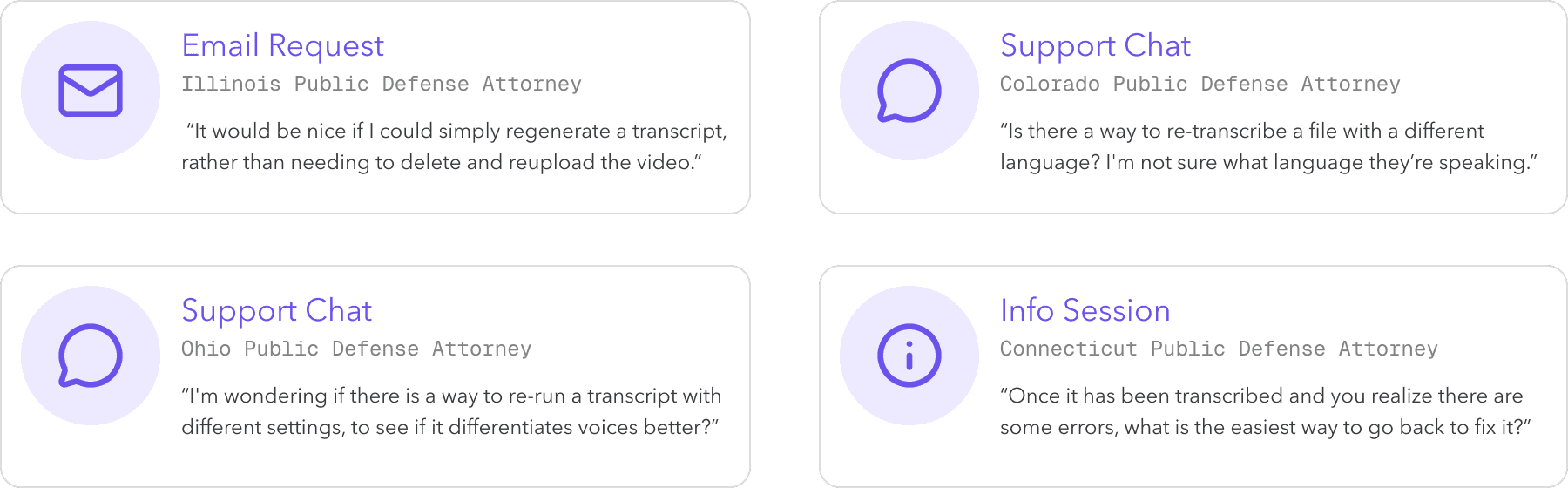
JusticeText had no built-in way to re-transcribe files. Instead, attorneys had to navigate back to the dashboard, delete the uploaded file, re-upload it, and reconfigure the upload settings. This process was lengthy and unnecessary, creating extra work for users and the JusticeText API.
Solution
A faster and easier way to re-process uploaded files.
The re-transcription feature allows users to quickly and easily re-process their uploaded files without ever having to having to leave the transcript editor screen.
Modal flow prevents broken context.
I decided the best solution for this feature would probably be a modal-based flow that starts from the editor and eases the transition back to the dashboard. JusticeText also recently incorporated a new payment flow, so for users opting to use our human transcription services, I integrated the system into the modal flow.
Old Flow

New Flow

Features
Gathering data about users' reasons for re-transcription.
The initial requests could be categorized into 4 distinct reasons for re-transcription: language, number of speakers, human transcription, or custom vocabulary words. So how do we test these hypotheses?

Feedback modal captures insights in production.
The team wanted to ship this feature as soon as possible, so I designed a feedback modal to further validate our insights in production.
Integrating the payment flow.
JusticeText offers human transcription services when users first upload a file, but several users requested a way to do so after the initial transcript has been generated. This triggers a separate payment flow for this service.
Built-in re-transcription for the transcript editor.
Contextual notifications guide users to the new feature within the information-dense transcript editor screen.
Impact
Reducing re-transcription time by 60%.
For busy public defenders combing through hundreds of hours of evidence every day, time and effort means everything. The revised flow I designed took the whole process from 17 to just 7 clicks.
JusticeText really has changed the efficiency with which I can work, and that's incredible because time is a super valuable commodity.
— Texas Public Defender
JusticeText has reduced the time to review video and prepare for trial by at least two-thirds.
— Rossen Law Firm, CEO
Process
Leading weekly design critiques.
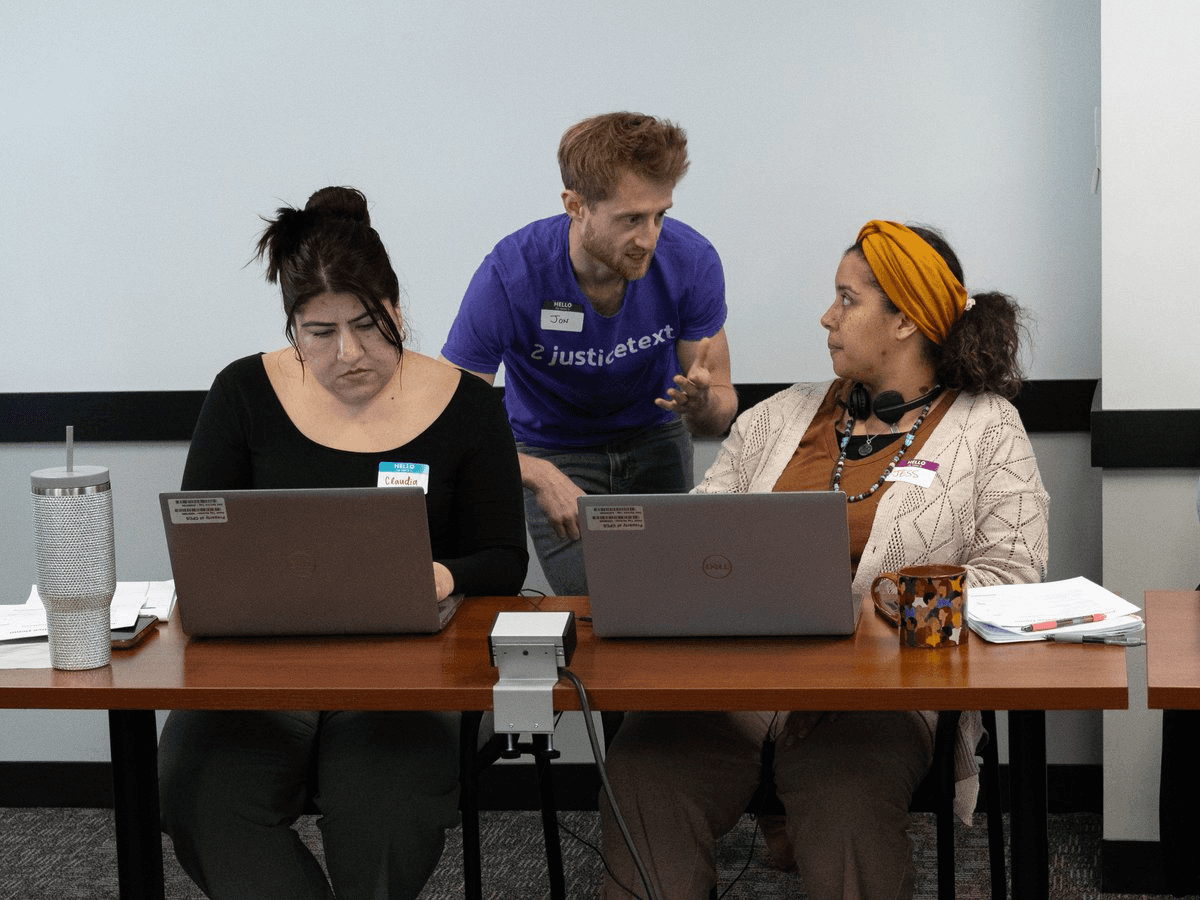
As a small team, I lead critique sessions with our CEO, design team, and Customer Success team members. The Upload Settings modal is an example of a re-design I pitched for the re-transcription feature. We opted for the version on the right that more closely aligns with the initial upload screen to maintain internal consistency and avoid confusing users.
Shipping my first product!
So exciting to have a project built out. This feature among other I designed are now live on the JusticeText platform. Thanks to the engineering team for making this happen!
Reflection
Working in the context of a cross-functional product team, I lead features from strategy to shipping. I also had the chance to influence workflows across the team through my research of AI as a tool for the design-to-dev handoff process.
I'm so grateful for the privilege of working with this team committed to racial and economic justice. This work was deeply meaningful for me not only professionally but personally.
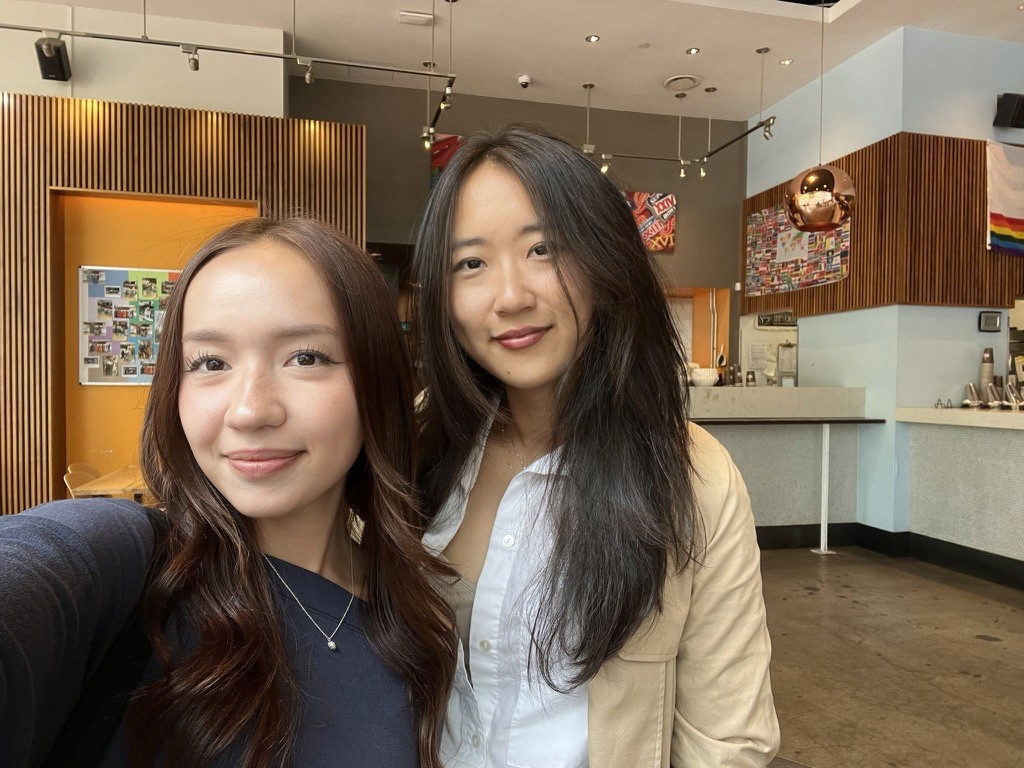
Kyla was a joy to have on the team. She brought curiosity, initiative, and a thoughtful approach to every challenge. Her background in CS and expertise in Figma made her an asset on projects exploring AI-driven design, and her creativity even shaped visuals now featured on our platform. She consistently went above and beyond. Any team would be lucky to have her.
— Sharon Tung, Founding Product Designer & Mentor


Next: Figma@CMU